

Dubai is the best city in the world for events because no other city on earth offers the same venue diversity within the same postcode. Desert dunes, private beaches, skyline terraces, private islands, world-class hotel ballrooms, heritage sites, and purpose-built event venues — all within thirty minutes of each other. You can brief an event planner in the morning and by lunchtime, you’ve scouted three completely different landscapes without leaving the city.
I’ve planned events in Dublin, across Europe, and throughout the Middle East. I moved to Dubai because I knew this was the city where the most ambitious ideas could actually be executed. After nearly twenty years of building events here, I’ve never found a concept this city couldn’t deliver. Here’s why.
No Other City Gives You This Many Venues in One Place
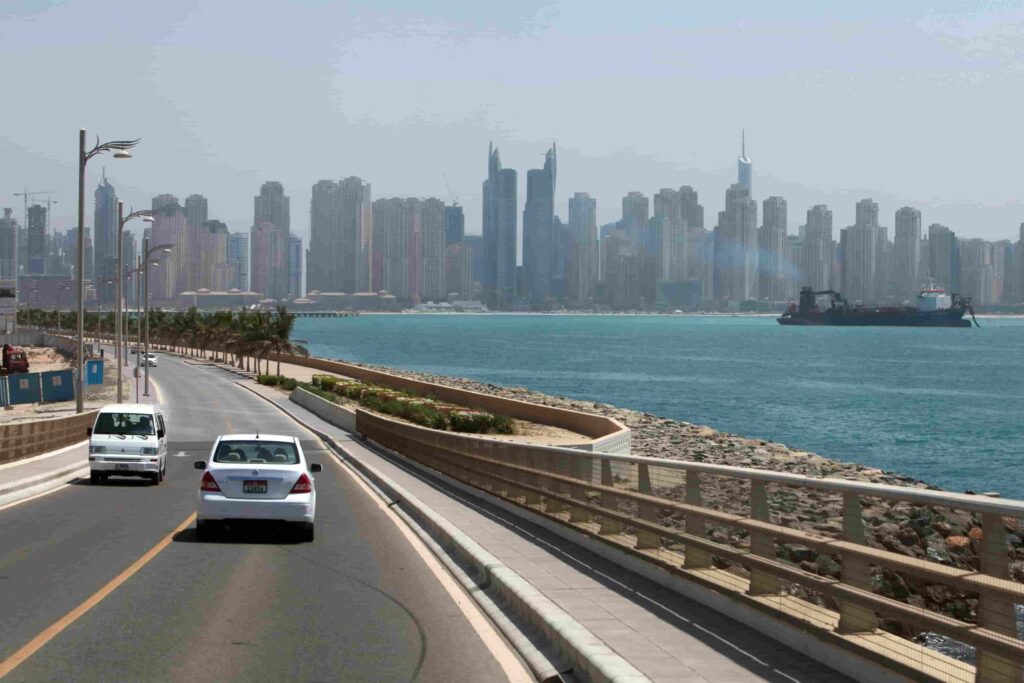
The single biggest advantage Dubai has over every other events destination is range. Most cities are known for one thing. Paris is elegant. New York has energy. Bali has nature. Dubai has all of it.
Within a 30-minute radius from the centre of the city, you can access open desert, a private beach, a rooftop overlooking the world’s tallest building, a private island, a world-class resort ballroom, an industrial warehouse space, a marina yacht club, and a heritage quarter that feels like a different century. No flights, no long transfers, no compromise. Just different backdrops for different briefs.
For event planners, this means something very specific: you never have to force a concept into the wrong venue. If the creative idea calls for raw desert landscape, it’s twenty minutes away. If it calls for a polished five-star ballroom with projection mapping and hydraulic staging, there are venues purpose-built for that. If the brief wants both — a desert arrival followed by a luxury indoor reveal — you can do that in the same evening without the logistics falling apart.
I’ve designed events where guests started the evening in a desert camp and ended it in a transformed tent at a five-star resort on the Palm. Same night. Same event. Two completely different worlds. Try doing that in London.
What a World-Class Brand Launch Looks Like in Dubai
Let me tell you about an event we designed recently that could only have happened in this city.
An international automotive brand was preparing a Middle East market launch for a vehicle with significant heritage — a nameplate that had been retired years ago and was now returning as a new-generation model. This wasn’t a standard product launch. It was a cultural statement. The brief demanded a creative concept that felt owned by this region, not a global campaign adapted for the local market.
We pitched a concept built entirely around the desert. Not as decoration — as narrative. The desert preserves things. It buries them and returns them unchanged when conditions are right. That metaphor — a legend buried in the sand, now rising — became the entire creative foundation of the event.
The Venue
We selected a signature tent venue at one of Dubai’s most iconic resorts on the Palm. Capacity for 300–400 guests: media, key opinion leaders, and regional partners. The space was transformed from a hospitality venue into something that felt ancient — raw sandstone, handwoven tent cloth, dried desert botanicals, sand flooring in the reveal zone, and polished dark marble in the dining areas. The duality of ancient and modern ran through every material choice.
The Five-Act Guest Journey
The evening was structured as five acts, each building toward a climax. Guests didn’t walk into a ballroom.
They walked into an expedition basecamp — navigation maps pinned to canvas boards, vintage equipment on shelves, handwritten route cards. A solo oud player performed original compositions commissioned specifically for the night. Guests heard the music before they saw the space.
From there, they moved through a gallery installation telling the vehicle’s history as a museum exhibit, not a brand display.
A spoken word artist moved between guests delivering fragments of the story in English and Arabic. Then a seated five-course dinner, each course tied to a terrain the vehicle conquers — coastal, desert, mountain, oasis, city — with a live ensemble combining oud, qanun, and tabla with a live electronic producer. The reference point was cinematic, not background.
The Reveal
The centrepiece of the room was not a stage. It was a sculpted sand dune, two meters high and eight meters wide, with oversized backlit fossils embedded in it — badges, steering wheels, door handles — as if an ancient vehicle lay buried within. Subtle tyre tracks led into it.
Twenty minutes before the reveal, a cinematic narration began. Not a corporate video. A myth. The story of the original vehicle told as legend. The dune shifted subtly — hidden hydraulic mechanisms caused it to breathe.
Then darkness. Wind. Rumbling. A heartbeat.
Compressed air jets created controlled sand cascades off the surface. The dune split open, the vehicle rose nose-first on a motorised ramp through falling sand, headlights blazing through the haze. Then the engine fired live.
The entire reveal was designed to be filmed vertically in a single continuous motion — darkness to blazing headlights — in under eight seconds.
No editing required. Immediately shareable. Every content touchpoint through the evening was engineered for organic amplification: personalised expedition dispatch cards at arrival, a sandstorm photo installation, a terrain simulator capturing candid reactions, and a bespoke fragrance station with five scents corresponding to the five terrains of the evening.
That event could only happen in Dubai. The venue, the desert narrative, the production infrastructure, the calibre of vendors, the proximity of the resort to the city — every element relied on something this city uniquely provides. Move that event to Singapore, Milan, or Riyadh and it loses at least three critical dimensions.
The Infrastructure Nobody Talks About
Dubai’s event industry doesn’t get enough credit for the infrastructure behind the scenes. This city has world-class AV companies, staging engineers, lighting designers, catering operations, and production houses. The talent pool is deep, experienced, and used to operating at the highest level because the benchmark here is set by government-scale events, global brand launches, and ultra-high-net-worth private celebrations.
When I design an event that requires hydraulic staging, projection mapping across a 400-square-metre tent, and a live five-piece ensemble with electronic production, I don’t need to fly in specialists from London or New York. The capability exists locally. That means faster turnaround, lower logistics costs, and production partners who already understand the local venue landscape.
The hotel and resort ecosystem is another layer. Dubai has more five-star hotel rooms per capita than almost any city on earth. The event teams at properties like Atlantis, Bulgari, Jumeirah, and Four
Seasons are not managing conferences as a side business — events are a core revenue line. That means purpose-built event spaces, experienced in-house teams, and a willingness to accommodate complex builds that you won’t find at most international hotel chains elsewhere.
Accessibility: Dubai Is the Centre of the World
Dubai sits within an eight-hour flight of two-thirds of the world’s population. For international brands, corporate headquarters, and global teams, that geographic position is a genuine competitive advantage. A brand launch in Dubai can have media flying in from London, Mumbai, Riyadh, Johannesburg, and Singapore— all within a single long-haul flight. No other events destination offers that reach.
Visa accessibility has improved dramatically in recent years. Most nationalities can obtain visas on arrival or through streamlined e-visa processes. For event organisers managing international guest lists of 200–400 people, the logistical difference between Dubai and a destination that requires embassy visits and advance paperwork is significant.
Emirates, Etihad, and flydubai, between them, connect Dubai to over 250 destinations. Direct flights from virtually every major city in the world. For guests arriving for a multi-day event, the airport-to-hotel transfer is rarely more than 30 minutes. The friction of getting here is as low as it gets for a destination of this calibre.
The Luxury Standard Is Different Here
Dubai doesn’t just do luxury. It sets the standard for it. The level of finish, service, and attention to detail at the top end of the market here is not matched by most cities. That matters for events because the baseline quality of everything — venues, catering, staffing, décor — is already elevated before you start designing.
When I plan an event at a Dubai five-star property, the house standard covers things that would be an upgrade charge in London or New York: linen quality, glassware, cutlery, lighting rigs, service ratios. The starting point is already premium. My job is to take it from premium to exceptional, and the gap between those two is much smaller here than in most markets.
For international clients who are used to fighting for quality at every level of the vendor chain, Dubai is a revelation. The florist delivers on time. The AV company has the equipment. The hotel team has done this before. The caterer understands the brief. That reliability is what makes ambitious creative concepts actually deliverable.
Eight Months of Perfect Weather (and What to Do About the Other Four)
From October to May, Dubai’s weather is close to perfect for outdoor events. Warm evenings, clear skies, no rain. This is when the desert setups, beach events, rooftop dinners, and outdoor brand activations come alive.
The combination of natural light at sunset and warm evening temperatures creates conditions that photograph beautifully and require minimal climate management.
The summer months — June through September — are hot. There’s no way around it. But this is where Dubai’s indoor venue infrastructure takes over. Climate-controlled ballrooms, resort tents, private villas, and enclosed terraces mean the quality of events doesn’t drop during summer.
Some of the most spectacular events I’ve planned have been indoor productions during the hottest months, where the venue becomes an immersive world that makes the outside temperature completely irrelevant.
Smart event planners use the summer strategically. Venues are more available, rates are often better, and the audience is more captive — people are looking for exceptional indoor experiences precisely because it’s too hot to be outside.
What Kind of Events Does Dubai Do Best?
Brand Launches and Product Reveals
Dubai’s production capabilities, venue diversity, and media accessibility make it one of the top three cities in the world for brand launches. The ability to create immersive, narrative-driven reveal experiences — with hydraulic staging, projection mapping, live entertainment, and KOL-ready content touchpoints — is world-class. International brands increasingly choose Dubai as their regional or global launch destination because the execution quality matches the ambition.
Corporate Events and Conferences
Purpose-built conference facilities, five-star hotel event spaces, and a deep bench of production partners make Dubai a natural choice for corporate events. Add the accessibility for international attendees and the ability to incorporate unique experiences — desert dinners, yacht receptions, rooftop networking — and the value proposition goes beyond the meeting room.
Private Celebrations and Milestone Events
Birthdays, anniversaries, engagements, weddings— Dubai offers the venue diversity and service infrastructure to create celebrations that feel impossibly special. Private pool villas, exclusive restaurant takeovers, beach setups, penthouse suites, and desert camps provide a range that means every celebration can be completely unique.
Incentive Trips and Team Building
For companies bringing teams to Dubai, the combination of luxury accommodation, unique group experiences, and world-class dining creates an incentive programme that people actually remember. We’ve designed everything from desert cookoff competitions for 160 people to intimate creative workshops in gallery spaces — and the feedback consistently reflects that Dubai delivered something their team hadn’t experienced before.
Why International Clients Work With Qrated Event
International clients face a specific challenge when planning events in Dubai: they don’t know the landscape. They don’t know which venues actually deliver, which vendors are reliable, which production partners can handle complex builds, and which properties have the flexibility to accommodate ambitious concepts.
That’s the gap we fill. Nearly twenty years of relationships with every major hotel, resort, and private venue in the UAE. An in-house design capability that starts from a blank page, not a template. Production partnerships built on trust and shared standards. And the experience of having planned over a thousand events across all seven emirates — from intimate private dinners to large-scale brand launches for international clients.
We handle everything end-to-end: creative concept, venue sourcing, staging, production, catering, entertainment, KOL strategy, content capture, and on-ground execution. International clients get a single point of contact who understands both the creative vision and the operational reality of making it happen in this market.
Frequently Asked Questions
Why is Dubai the best city for events?
Dubai offers unmatched venue diversity — desert, beach, skyline, private islands, and world-class hotel ballrooms all within 30 minutes. Combined with world-class production infrastructure, eight months of perfect weather, geographic accessibility (within 8 hours of two-thirds of the world’s population), and a luxury standard that is among the highest globally, no other city provides the same combination for event planners.
What kind of events can you host in Dubai?
Brand launches, corporate conferences, team building, private celebrations (birthdays, anniversaries, weddings), product reveals, incentive trips, gala dinners, and bespoke experiences. Dubai’s venue range and production capabilities support everything from intimate dinners for 10 to large-scale productions for 400+.
How far in advance should I plan an event in Dubai?
For large-scale events (200+ guests, custom builds, brand launches), 3–6 months minimum. For private celebrations and smaller corporate events, 4–8 weeks is often sufficient depending on venue availability. Peak season (October–March) requires earlier booking due to demand.
Is Dubai good for international brand launches?
Dubai is one of the top three cities globally for brand launches. Its media accessibility, KOL ecosystem, production infrastructure, and ability to create immersive, narrative-driven experiences make it a preferred destination for regional and global product reveals. The combination of venue diversity and execution quality allows for launch concepts that wouldn’t be feasible in most other markets.
Can you plan events across all seven emirates?
Yes. Qrated Event plans and executes events across Dubai, Abu Dhabi, Sharjah, Ras Al Khaimah, Ajman, Umm Al Quwain, and Fujairah. Each emirate offers different venue types and experiences, and we have established relationships with properties and vendors across all seven.
How much does an event planner cost in Dubai?
Event planning fees in Dubai vary by scale and complexity. Intimate private celebrations typically range from AED 10,000–50,000 in planning and coordination fees.
Large-scale corporate events and brand launches range from AED 50,000–250,000+ depending on production requirements, venue, entertainment, and guest count. We provide transparent, itemised proposals so clients see exactly where every dirham goes.
Plan Your Dubai Event Today


